



Fetal Heart Rate in Pregnancy: Normal Range & Variations

For most expecting parents, hearing the baby’s heartbeat for the first time during a pregnancy scan is an unforgettable and emotional moment.
That rhythmic sound instantly creates a deep connection and reassures parents that their baby is growing well.

However, as pregnancy progresses, many parents start noticing that the fetal heart rate (FHR) mentioned in scan reports keeps changing.
Sometimes it is lower, sometimes higher, and this variation often leads to anxiety:

  • “Why is my baby’s heart rate less today?”

  • “Last scan it was higher — is something wrong?”

  • “Doctor, should we worry?”

At Nisarga Diagnostics, we frequently receive these questions during pregnancy scans.
This blog explains fetal heart rate, its normal range, why it varies, and when medical attention is required — in simple, reassuring language.

Watch our video on : Fetal Heart Rate in Pregnancy

💓 What Is Fetal Heart Rate?

Fetal Heart Rate (FHR) refers to the number of times a baby’s heart beats per minute while inside the mother’s womb.

  • It can be detected as early as 6–7 weeks of pregnancy using ultrasound.

  • As pregnancy advances, fetal heart activity becomes clearer and easier to measure.

  • FHR is routinely assessed during:

Over time, this can result in:

  • Restricted fetal growth

  • Low birth weight

  • Delayed organ development

✅ What Is the Normal Fetal Heart Rate Range?

fetal heart rate

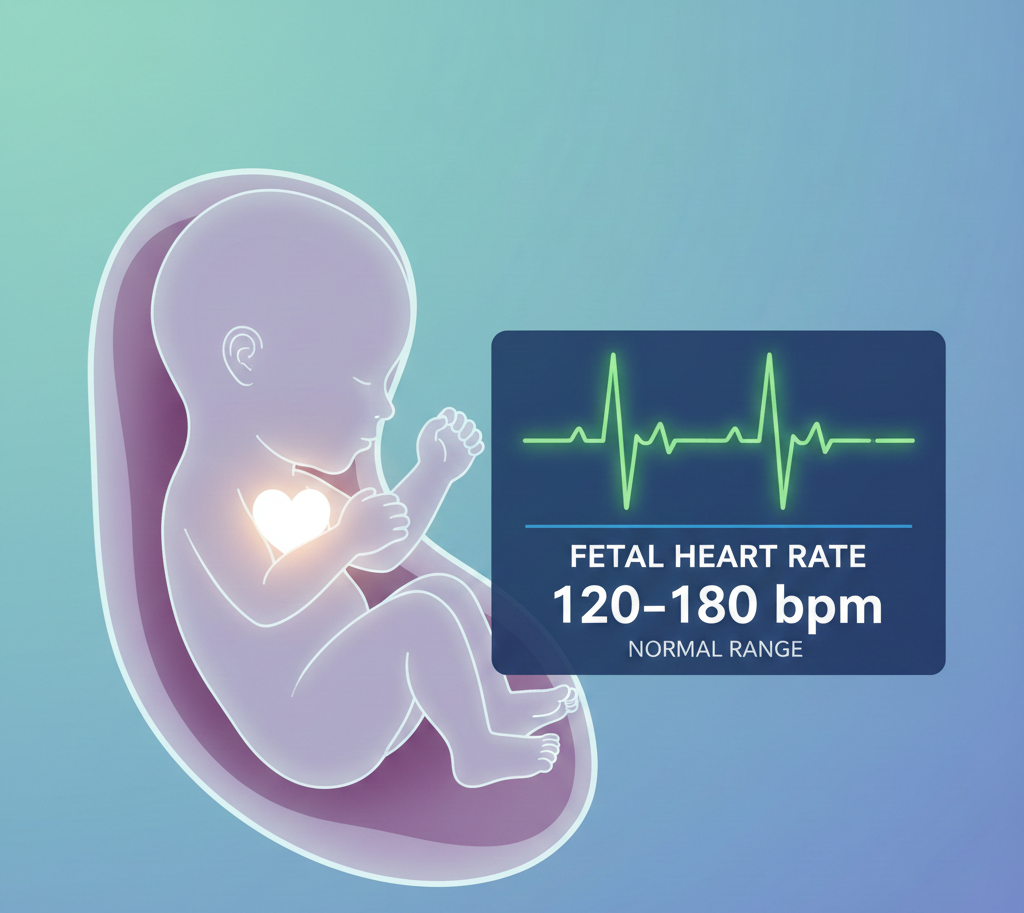
The normal fetal heart rate range is between 120 and 180 beats per minute (bpm).

This range is considered healthy and reassuring during pregnancy scans.

Fetal Heart RateInterpretation
120–180 bpmNormal
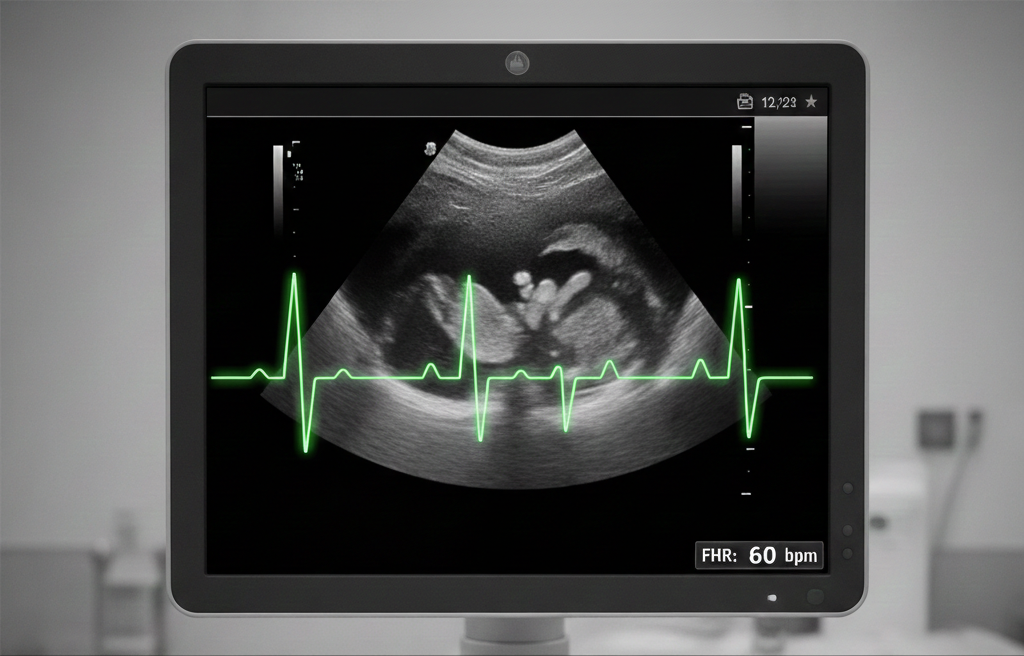
<120 bpmFetal Bradycardia
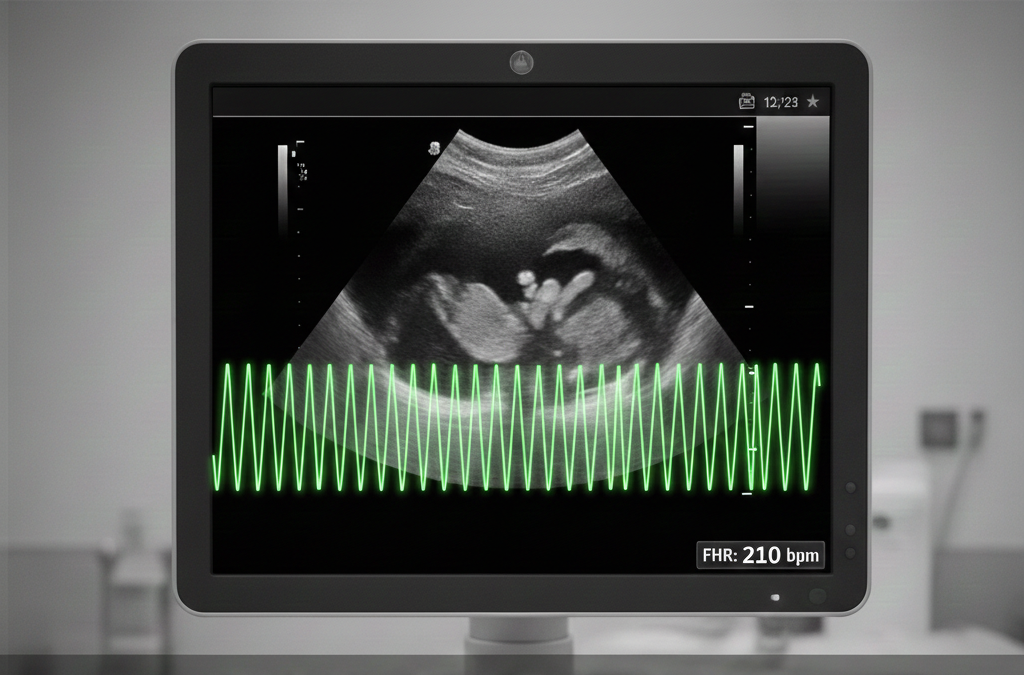
>180 bpmFetal Tachycardia

⚠️ Important:
A single reading slightly above or below the range does NOT automatically mean a problem.

🔻 What Is Fetal Bradycardia?

Fetal Bradycardia means the fetal heart rate is less than 120 bpm.

Possible reasons:

  • Baby is sleeping or inactive

  • Temporary change in fetal activity

  • Early gestational age

  • Transient cord compression

  • Rarely, heart rhythm abnormalities

In most cases, mild bradycardia is temporary and resolves on its own.


🔺 What Is Fetal Tachycardia?

Fetal Tachycardia refers to a heart rate above 180 bpm.

Common reasons include:

  • Baby is very active

  • Maternal fever

  • Anxiety or stress during scan

  • Dehydration

  • Medications

  • Rare fetal rhythm disorders

Again, activity-related tachycardia is common and usually harmless.

👶 Why Does Fetal Heart Rate Keep Changing?

This is the most important point every parent should understand.

👉 Fetal heart rate is NOT constant.

It varies mainly due to baby’s activity level, just like in adults.

🏃 When the Baby Is Active

  • Baby moves, kicks, stretches

  • Heart rate increases

  • FHR may go closer to 160–180 bpm

😴 When the Baby Is Resting or Sleeping

  • Less movement

  • Lower heart rate

  • FHR may drop closer to 120–130 bpm

Both situations are completely normal.

😊 Why Parents Are Happy During the First Scan — and Anxious Later

First Scan Experience

  • Hearing heartbeat for the first time = pure joy

  • Parents are emotionally reassured

  • Focus is only on “heartbeat present or not”

Later Scans (NT, Anomaly, Growth Scans)

  • Parents start comparing numbers

  • They remember previous scan values

  • Small variations create unnecessary fear

👉 This is where proper counselling plays a major role.

At Nisarga Diagnostics, we make it a point to:

  • Explain heart rate variations

  • Show fetal movements on screen

  • Reassure parents in real time

🩺 When Should You Really Worry?

Although variations are common, medical attention is needed if:

  • Heart rate remains persistently <120 bpm

  • Heart rate remains persistently >180 bpm

  • Associated with:

    • Reduced fetal movements

    • Abnormal scan findings

    • Maternal illness

  • Abnormal rhythm patterns are observed

In such cases, doctors may advise:

  • Repeat scans

  • Doppler studies

  • Fetal echocardiography

  • Obstetric consultation

🩷 Final Words

Hearing your baby’s heartbeat is one of the most beautiful moments of pregnancy.
Understanding that variation is normal helps reduce stress and anxiety.

If you ever have doubts about scan findings, early clarification and expert evaluation are always better than worry.

Nisarga Diagnostics is committed to providing accurate pregnancy scans, expert interpretation, and compassionate care for every expecting family.

Leave a Comment

Your email address will not be published. Required fields are marked *