
Amniotic Fluid in Pregnancy

Does Drinking More Water During Pregnancy Affect Your Baby’s Breathing? 🤰💧

Amniotic fluid in pregnancy plays a vital role in protecting and supporting your baby throughout the pregnancy journey. Yet, many expecting mothers feel confused when they see terms like AFI (Amniotic Fluid Index) or Deepest Vertical Pocket (DVP) in their scan reports.

Questions like:
👉 “Is my fluid level normal?”
👉 “Is low fluid dangerous?”
👉 “What does AFI 7 or AFI 20 mean?”

are very common.

In this detailed guide, we will explain everything about amniotic fluid in pregnancy, including its function, normal range, causes of imbalance, risks, and when you should consult a doctor.

Watch our video on : Amniotic Fluid in Pregnancy

What is Amniotic Fluid in Pregnancy?

Amniotic fluid in pregnancy is the clear liquid that surrounds your baby inside the uterus.

Think of it like a protective water cushion — similar to how a fish lives safely inside water. Your baby floats inside this fluid, allowing safe movement and development.

Functions of Amniotic Fluid

Amniotic fluid is not just water — it performs several critical roles:

✔ Cushioning Effect
Protects the baby from external pressure or injury

✔ Shock Absorption
Even if the mother falls or experiences impact, the baby remains safe

✔ Supports Movement
Allows the baby to move freely, which is important for muscle and bone development

✔ Temperature Control
Maintains a stable environment inside the womb

✔ Lung Development
Helps the baby practice breathing movements

✔ Prevents Cord Compression
Keeps the umbilical cord safe and functional

How is Amniotic Fluid Formed?

One of the most interesting aspects of amniotic fluid in pregnancy is that the baby itself plays a major role in maintaining it.

👉 The baby’s kidneys produce urine
👉 The baby passes urine into the amniotic sac
👉 The baby swallows the fluid
👉 The fluid is recycled continuously

This natural cycle helps maintain the right level of amniotic fluid.

How is Amniotic Fluid Measured?

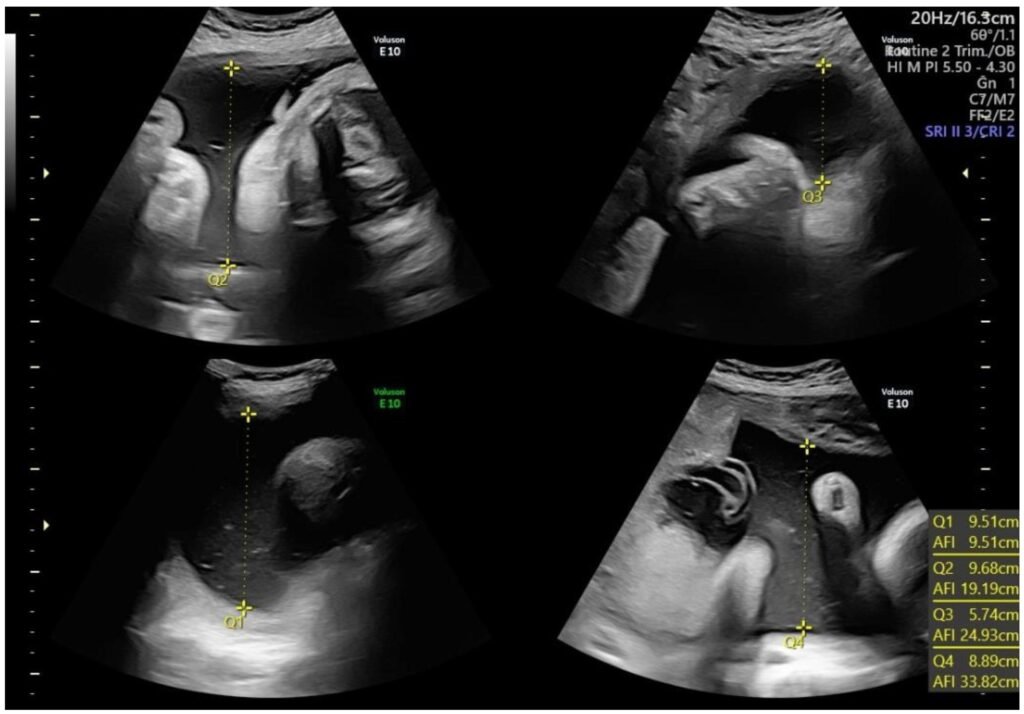
Doctors measure amniotic fluid in pregnancy using ultrasound scans.

There are two common methods:

1. Amniotic Fluid Index (AFI)

AFI measures fluid in four quadrants of the uterus.

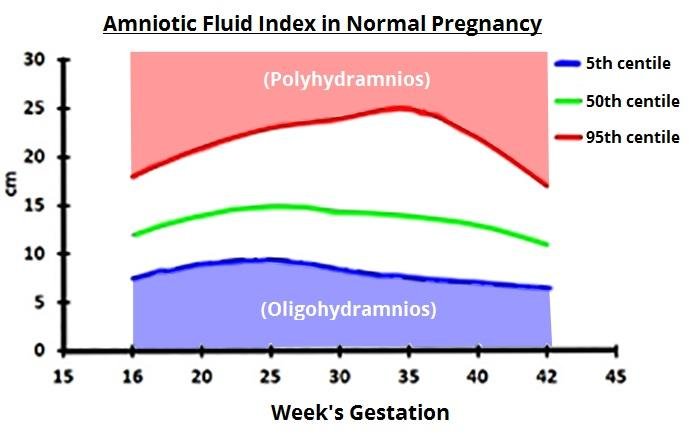
👉 Normal Range: 8 cm to 18 cm

2. Deepest Vertical Pocket (DVP)

Measures the single deepest pocket of fluid.

👉 Normal Range: 2 cm to 8 cm

📌 Important Tip:
Many patients get confused because reports may show either AFI or DVP. Always check which method is used before interpreting results.

What is Low Amniotic Fluid? (Oligohydramnios)

When amniotic fluid in pregnancy is lower than normal (AFI < 8 cm), it is called Oligohydramnios.

Causes of Low Amniotic Fluid

✔ High blood pressure (BP) in the mother
✔ Placental problems
✔ Baby’s kidney issues
✔ Urinary tract abnormalities
✔ Chromosomal abnormalities
✔ Fetal infections
✔ Leakage of amniotic fluid

Risks of Low Amniotic Fluid

⚠ Restricted baby growth
⚠ Reduced movements
⚠ Complications during delivery
⚠ Increased risk of cord compression

What is High Amniotic Fluid? (Polyhydramnios)

When amniotic fluid in pregnancy is higher than normal (AFI > 18–20 cm), it is called Polyhydramnios.

Causes of High Amniotic Fluid

✔ Gestational Diabetes (most common cause)
✔ Baby swallowing problems
✔ Esophagus development issues
✔ Congenital abnormalities
✔ Spine or abdominal wall defects
✔ Sometimes no clear reason

Risks of High Amniotic Fluid

⚠ Preterm labor
⚠ Breathing difficulty for mother
⚠ Increased abdominal pressure
⚠ Delivery complications

Symptoms You Should Not Ignore

Sometimes abnormal amniotic fluid in pregnancy may show symptoms:

✔ Sudden increase in abdominal size
✔ Reduced baby movements
✔ Breathing difficulty
✔ Tight or stretched abdomen

If you notice any of these, consult a doctor immediately.

Importance of Ultrasound Scans

Monitoring amniotic fluid in pregnancy is essential for a healthy pregnancy.

At Nisarga Diagnostics, advanced ultrasound technology helps:

✔ Accurate AFI measurement
✔ Early detection of abnormalities
✔ Monitoring baby growth
✔ Identifying complications

Common Confusion in Reports

Many patients panic after seeing numbers in reports.

👉 AFI 7 → Slightly low
👉 AFI 20 → Slightly high

💡 But remember:
✔ One reading alone is not final
✔ Doctors consider overall condition
✔ Repeat scans may be needed

Can Amniotic Fluid Levels Be Improved?

Yes, depending on the cause.

For Low Fluid

✔ Increase hydration
✔ Proper rest
✔ Medical monitoring
✔ Treat underlying conditions

When Should You See a Doctor?

Consult immediately if:

✔ Scan shows abnormal AFI
✔ You feel reduced baby movement
✔ You have BP or diabetes
✔ You experience unusual symptoms

Conclusion

Maintaining normal amniotic fluid in pregnancy is crucial for your baby’s safety and development. Both low and high levels can indicate underlying issues, but with regular scans and proper care, most conditions can be managed effectively.

Timely diagnosis and monitoring can make a significant difference in ensuring a safe and healthy pregnancy journey.

Leave a Comment

Your email address will not be published. Required fields are marked *