



Several medical and physical factors can cause early cervical opening:
1. Polyhydramnios (Excess Amniotic Fluid)
Excess fluid increases pressure inside the uterus, pushing against the cervix. This pressure can gradually weaken and open the cervix early.
 This condition is usually detected during routine sonography scans, making early monitoring very important.
2. Twin Pregnancy or Big Baby
When carrying twins or a larger baby:
- The uterus expands more than usual
- Increased weight puts pressure on the cervix
3D & 4D ultrasound scans help monitor fetal growth and detect such high-risk conditions early.
3. Uterine Structural Abnormalities
Certain uterine shapes can increase the risk:
- Septate uterus
- Unicornuate uterus
These structural issues can affect how pressure is distributed inside the uterus.
These abnormalities are often identified using advanced imaging and radiological procedures.
4. Previous Cervical Surgeries
Past medical procedures can weaken the cervix, such as:
- D&C (Dilation and Curettage)
- Cervical biopsies
- Previous pregnancy-related interventions
5. Hormonal or Genetic Factors
In some cases, the cervix may naturally be weaker due to:
- Hormonal imbalance
- Genetic predisposition
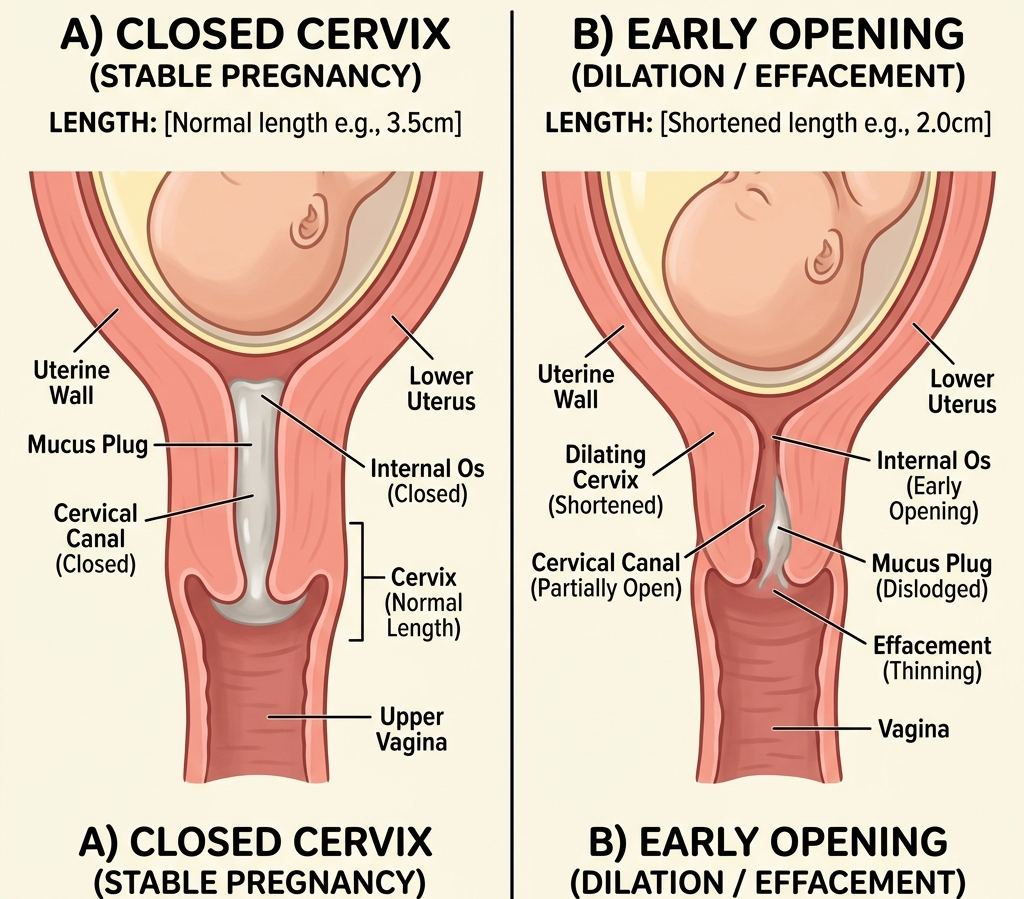
Early diagnosis is the key to preventing complications.
1. Cervical Length Measurement (Ultrasound)
A transvaginal sonography scan is used to measure cervical length:
- Normal cervix: Long and closed
- Incompetent cervix: Shortened or opening
At Nisarga Diagnostics, high-resolution sonography and 3D ultrasound imaging provide accurate measurements.
2. Doppler Scanning
In some high-risk pregnancies, Doppler scans are used to:
- Check blood flow to the uterus and placenta
- Monitor fetal well-being
3. Routine Pregnancy Scans
Regular scans help detect:
- Twin pregnancy
- Excess fluid (polyhydramnios)
- Fetal growth issues
This is why scheduling timely scans at a trusted diagnostic center is critical.
Why Early Detection Matters
Cervical incompetence can be silent, but its impact can be serious.
Early detection helps:
- Prevent pregnancy loss
- Plan timely treatment
- Monitor cervical changes
- Ensure safe pregnancy progression

Founder of Nisarga Diagnostics, is a renowned fetal ultrasound specialist with over 20 years of expertise. An alumnus of Government Medical Colleges in Mysore and Bangalore, he also holds a D.N.B. from the National Board of Examinations, Delhi, and certification from the Fetal Medicine Foundation, London. A former Professor and HOD, he has trained countless PG students and junior radiologists, shaping the future of fetal imaging in India.