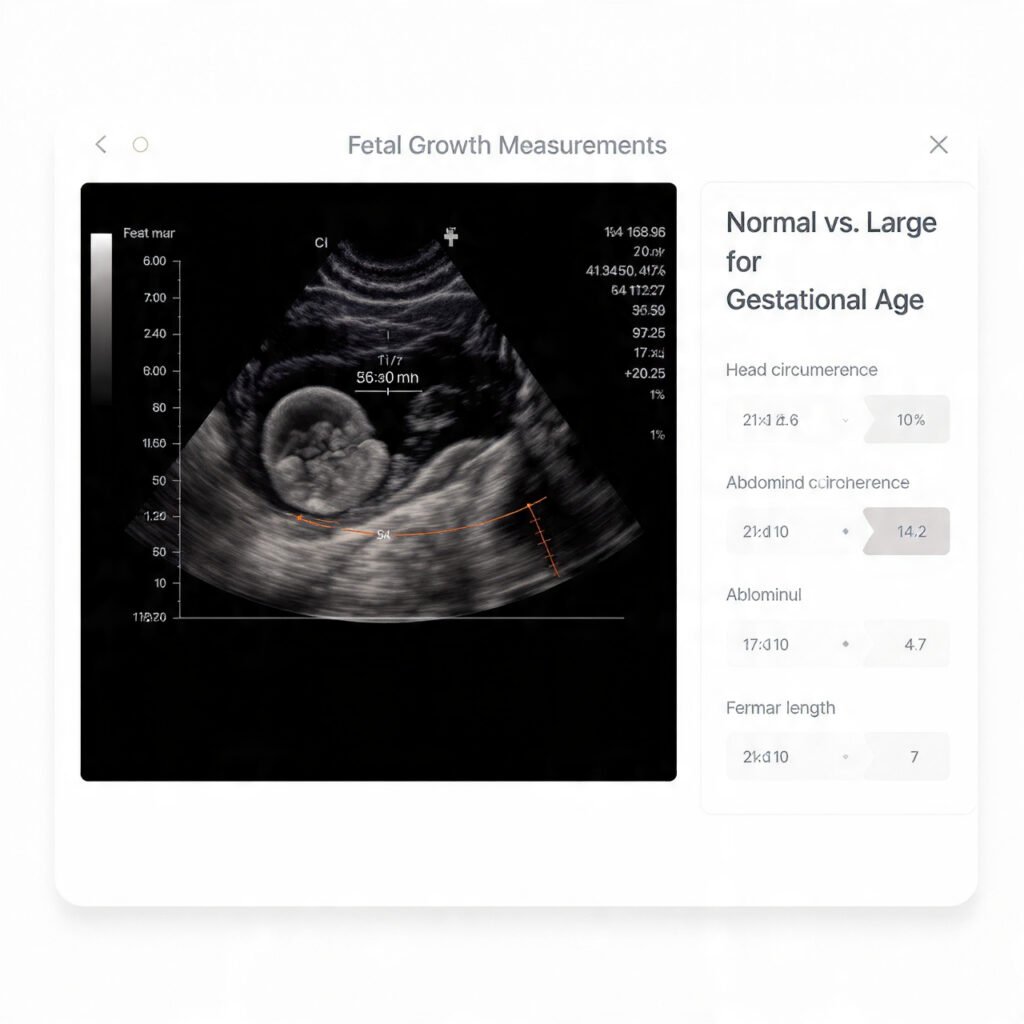
What Is Large for Gestational Age in Pregnancy? 🤰📈

During pregnancy, monitoring your baby’s growth is one of the most important aspects of antenatal care. Doctors use ultrasound scans to track how well the baby is growing inside the womb.

When a pregnancy scan report mentions Large for Gestational Age (LGA), it means that the baby’s estimated weight is higher than expected for that specific week of pregnancy.

Medically, a baby is considered LGA when:

  • The estimated fetal weight is above the 90th percentile for the gestational age

This finding is most commonly detected during growth scans done in the 8th or 9th month of pregnancy, when fetal size and weight estimation becomes more reliable.

Watch our video on : What is Large for gestational age in pregnancy?

Why Is Identifying LGA Important?

An LGA baby may appear healthy, but if the underlying cause is not identified early, it can lead to complications during pregnancy, labor, and after delivery.

That is why early detection through accurate growth scans plays a crucial role in ensuring a safe pregnancy and healthy baby.

Main Causes of Large for Gestational Age (LGA)

1️⃣ Gestational Diabetes – The Most Common Cause

The number one reason for LGA in pregnancy is gestational diabetes, also called pregnancy sugar.

When a pregnant woman’s blood sugar levels are high:

  • Extra glucose crosses the placenta
  • The baby produces more insulin
  • This results in excess fat storage and rapid weight gain in the baby

Many women do not experience any obvious symptoms of high blood sugar. In fact, several cases of gestational diabetes are detected only after a routine growth scan shows increased fetal weight.

This makes growth scans extremely important in late pregnancy.

2️⃣ Poorly Controlled Pre-existing Diabetes

Women who already have diabetes before pregnancy are at a higher risk of having an LGA baby, especially if blood sugar levels are not strictly controlled throughout pregnancy.

Regular monitoring and frequent growth scans are essential in such cases.

3️⃣ Excessive Maternal Weight Gain

Gaining too much weight during pregnancy can also increase the baby’s size. This may happen due to:

  • Overeating
  • High-calorie diets
  • Reduced physical activity (without medical indication)

Balanced nutrition is key to preventing unnecessary fetal overgrowth.

4️⃣ Genetic and Familial Factors

In some cases, LGA may be due to genetics:

  • Tall or large-built parents
  • Previous history of big babies

However, even in such situations, doctors must rule out medical causes like gestational diabetes.

How Is LGA Diagnosed?

At Nisarga Diagnostics, LGA is diagnosed using advanced pregnancy growth scans that include:

  • Estimated fetal weight calculation
  • Measurement of baby’s head circumference
  • Abdominal circumference (very important for detecting sugar-related growth)
  • Femur length
  • Comparison with gestational age charts

These measurements help radiologists and doctors determine whether the baby is growing appropriately or is larger than expected.

If LGA is suspected, your doctor may recommend:

  • Blood sugar tests (OGTT or fasting/postprandial sugars)
  • Repeat growth scans
  • Doppler studies to assess placental blood flow

When Are Growth Scans for LGA Usually Done?

Growth scans are usually recommended between:

👉 28 to 36 weeks of pregnancy

However, additional scans may be advised if the mother has:

  • Gestational diabetes
  • High blood pressure
  • Thyroid disorders
  • Previous history of LGA baby
  • Rapid increase in abdominal size
  • Reduced or excessive fetal movements

At Nisarga Diagnostics, these scans are performed with precision to help doctors make timely clinical decisions.

Risks Associated With LGA Pregnancy

⚠️ Risks for the Baby

If not managed properly, LGA can increase the risk of:

  • Shoulder dystocia during delivery
  • Birth injuries
  • Low blood sugar (hypoglycemia) after birth
  • Breathing difficulties
  • Increased chances of obesity and diabetes later in life

⚠️ Risks for the Mother

Mothers carrying an LGA baby may face:

  • Prolonged or difficult labor
  • Higher likelihood of assisted delivery or C-section
  • Increased risk of birth canal tears
  • Postpartum hemorrhage (excess bleeding after delivery)

This is why early identification and planned management are essential.

Can LGA Be Managed Successfully?

Yes ✅
With early diagnosis and proper care, most LGA pregnancies result in healthy outcomes.

✔️ Management Includes:

  • Strict blood sugar monitoring
  • Diet control with guidance from a nutritionist
  • Medical treatment if required
  • Regular follow-up growth scans
  • Delivery planning based on baby’s size and mother’s condition

Doctors may decide the safest mode and timing of delivery depending on scan findings.

Can LGA Be Prevented?

Not all cases can be prevented, but the risk can be significantly reduced by:

  • Early screening for gestational diabetes
  • Healthy, balanced pregnancy diet
  • Avoiding excess sugar and refined carbohydrates
  • Regular antenatal checkups
  • Timely growth scans
  • Following medical advice strictly

Early action makes a big difference.

Final Takeaway 💙

If your scan report mentions Large for Gestational Age (LGA), there is no need to panic.
LGA is a common and manageable condition, especially when detected early.

👉 With proper monitoring, sugar control, and expert guidance, you can look forward to a safe pregnancy and healthy baby.

If advised by your doctor, choose a trusted center like Nisarga Diagnostics for accurate growth scans and reliable pregnancy assessment.

Leave a Comment

Your email address will not be published. Required fields are marked *