
PCOD Symptoms and Diagnosis

How to Identify PCOD? Symptoms, Tests & Diagnosis?

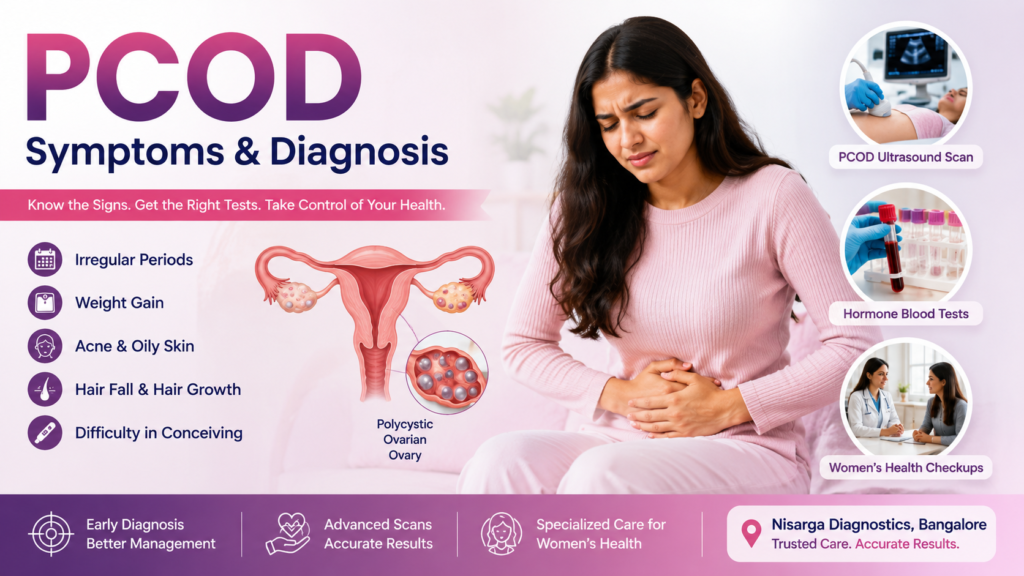
PCOD (Polycystic Ovarian Disease) is one of the most common hormonal conditions affecting women today. Many women experience symptoms like irregular periods, weight gain, acne, or hair fall but often ignore them, assuming they are caused by stress or lifestyle changes.

However, these symptoms may indicate PCOD.

Early diagnosis is important because untreated PCOD can affect fertility, metabolism, hormonal balance, and overall health.

In this blog, let us understand:

  • What is PCOD?
  • Common symptoms of PCOD
  • How doctors diagnose PCOD
  • Which scans and tests are needed
  • When to seek medical help

Watch our video on : How to Identify PCOD? Symptoms, Tests & Diagnosis

What is PCOD?

PCOD (Polycystic Ovarian Disease) is a hormonal disorder where the ovaries produce immature eggs that may develop into multiple small cysts.

This condition may lead to:

  • Irregular ovulation
  • Delayed periods
  • Hormonal imbalance
  • Weight gain
  • Fertility-related issues

Today, PCOD has become increasingly common due to:

  • Stress
  • Poor sleep
  • Lack of exercise
  • Obesity
  • Insulin resistance
  • Unhealthy lifestyle habits

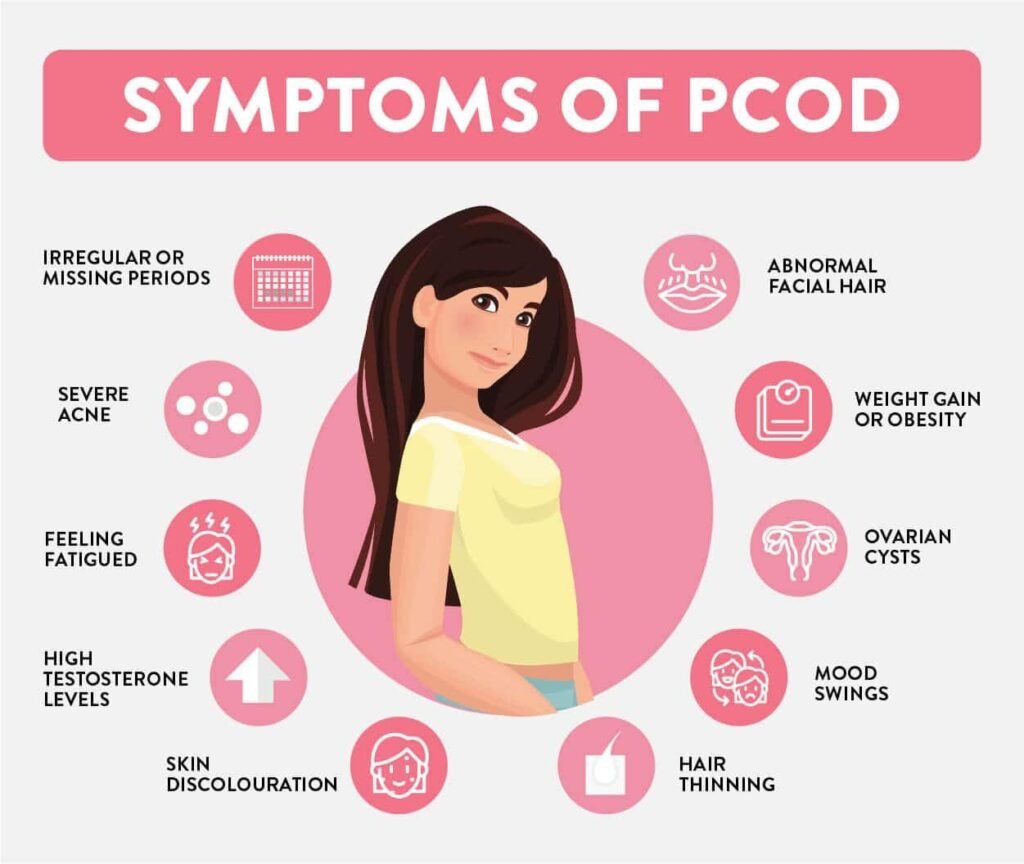
Common Symptoms of PCOD

1. Irregular Periods

One of the earliest and most common signs of PCOD is irregular menstrual cycles.

Women with PCOD may experience:

  • Delayed periods
  • Missed periods
  • Heavy bleeding
  • Very light bleeding
  • Periods once every few months

If periods are frequently irregular, proper evaluation is important.

2. Weight Gain
Many women with PCOD notice sudden weight gain, especially around the abdomen.
 
Hormonal imbalance and insulin resistance can make weight loss difficult even with diet and exercise.


3. Acne and Oily Skin

PCOD may increase androgen hormone levels, leading to:

Pimples
Acne
Oily skin
Acne scars

Persistent adult acne should not be ignored.

4. Excess Hair Growth

Women with PCOD may notice unwanted hair growth on:

  • Face
  • Chin
  • Chest
  • Abdomen

This condition is called hirsutism.

5. Hair Fall

Hair thinning and excessive hair fall are also common symptoms of PCOD caused by hormonal imbalance.

6. Difficulty Getting Pregnant

Irregular ovulation can make conception difficult.

Many women discover PCOD only after facing delays in pregnancy.

PCOD Symptoms and Diagnosis

How is PCOD Diagnosed?

PCOD diagnosis usually involves:

  • Symptom evaluation
  • Ultrasound scans
  • Hormone blood tests
  • Physical examination

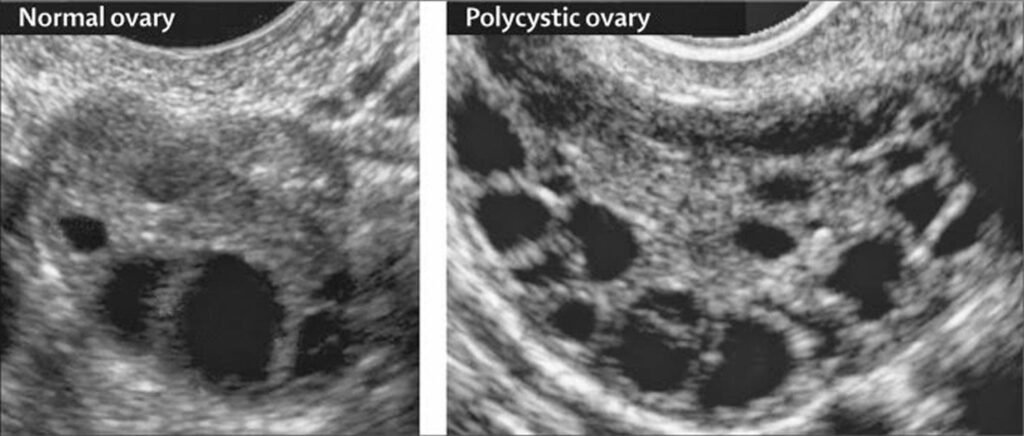
Ultrasound Scan for PCOD

A pelvic ultrasound scan helps doctors evaluate the ovaries and reproductive organs.

During the scan, doctors may identify:

  • Enlarged ovaries
  • Multiple small ovarian follicles
  • Polycystic ovarian appearance

Women experiencing irregular periods or fertility concerns are often advised to undergo ultrasound evaluation.

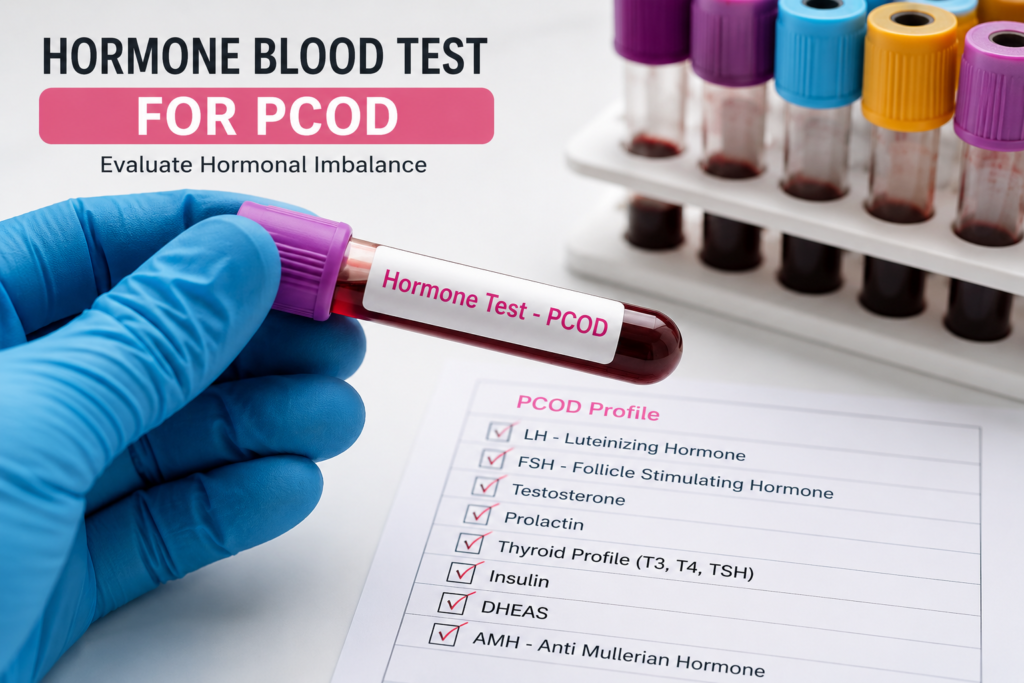
Hormone Blood Tests for PCOD

Doctors may recommend hormone blood tests to assess hormonal imbalance.

Common tests include:

  • LH (Luteinizing Hormone)
  • FSH (Follicle Stimulating Hormone)
  • Testosterone
  • Thyroid Profile
  • Prolactin
  • Insulin Levels

These tests help confirm PCOD and rule out other hormonal conditions.

Difference Between PCOD and PCOS

Many people confuse PCOD and PCOS.

Although both conditions are related to hormonal imbalance:

  • PCOD is more common and often manageable with lifestyle changes
  • PCOS is a more severe endocrine disorder affecting metabolism and fertility

Proper diagnosis is important for appropriate treatment.

What Happens if PCOD is Ignored?

Ignoring PCOD symptoms may increase the risk of:

  • Infertility
  • Diabetes
  • High cholesterol
  • Obesity
  • Anxiety and stress
  • Endometrial problems

Early diagnosis and regular monitoring can help prevent complications.

When Should You Consult a Doctor?

Consult a healthcare professional if you experience:

  • Irregular periods
  • Severe acne
  • Sudden weight gain
  • Excessive hair fall
  • Facial hair growth
  • Difficulty getting pregnant

Early diagnosis helps improve long-term health outcomes.

Can PCOD Be Managed?

Yes. PCOD can often be effectively managed through:

  • Regular exercise
  • Healthy eating
  • Weight management
  • Stress reduction
  • Good sleep habits

Doctors may also prescribe medications depending on symptoms and fertility goals.

PCOD Diagnosis at Nisarga Diagnostics

Advanced diagnostic evaluation plays an important role in identifying PCOD early.

Services commonly recommended for PCOD evaluation include:

  • Pelvic Ultrasound Scan  Hormone Blood Tests
  • Thyroid Testing
  • Women’s Health Scans
  • Pregnancy-Related Scans
  • General Health Checkups

Conclusion

PCOD is a common hormonal condition, but it should never be ignored. Symptoms like irregular periods, acne, weight gain, and hair fall may indicate underlying hormonal imbalance.

Getting the right scans and hormone tests at the right time can help prevent future complications and improve reproductive health.

If you notice symptoms of PCOD, consult a healthcare professional and undergo proper evaluation.

Leave a Comment

Your email address will not be published. Required fields are marked *