

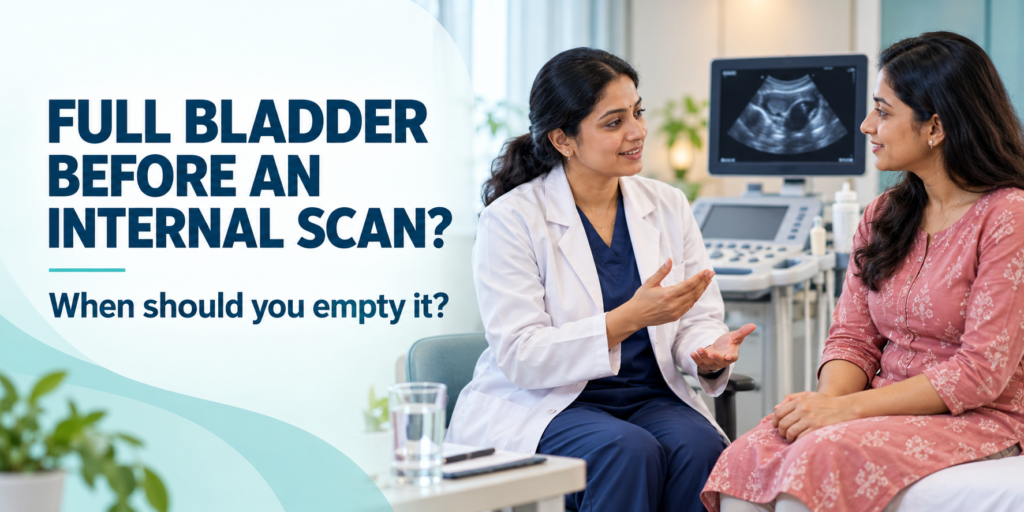
Going for an internal scan (TVS) and unsure whether your bladder should be full or empty? You may have heard that an internal scan is usually done with an empty bladder, yet the diagnostic centre may ask you to drink water before your appointment. There is a reason these instructions can differ.
Quick preparation guide
- A full bladder may be requested if the radiologist plans to scan through the abdomen first.
- You may be asked to empty your bladder before the internal scan for a closer view of the pelvic organs.
- Follow the instructions given by your diagnostic centre for your specific appointment.
- Check with the staff before emptying your bladder if you were asked to drink water.
This guide explains why the centre may ask you to arrive with a full bladder, when you may be asked to empty it, and what to do if you are unsure.
1. Why might the centre ask you to drink water?
An internal scan, also called a transvaginal ultrasound (TVS), provides a closer view of the uterus and ovaries. However, the radiologist may first scan through the abdomen to get a broader view of the pelvis. A comfortably full bladder can help provide an acoustic window for this abdominal part of the examination.
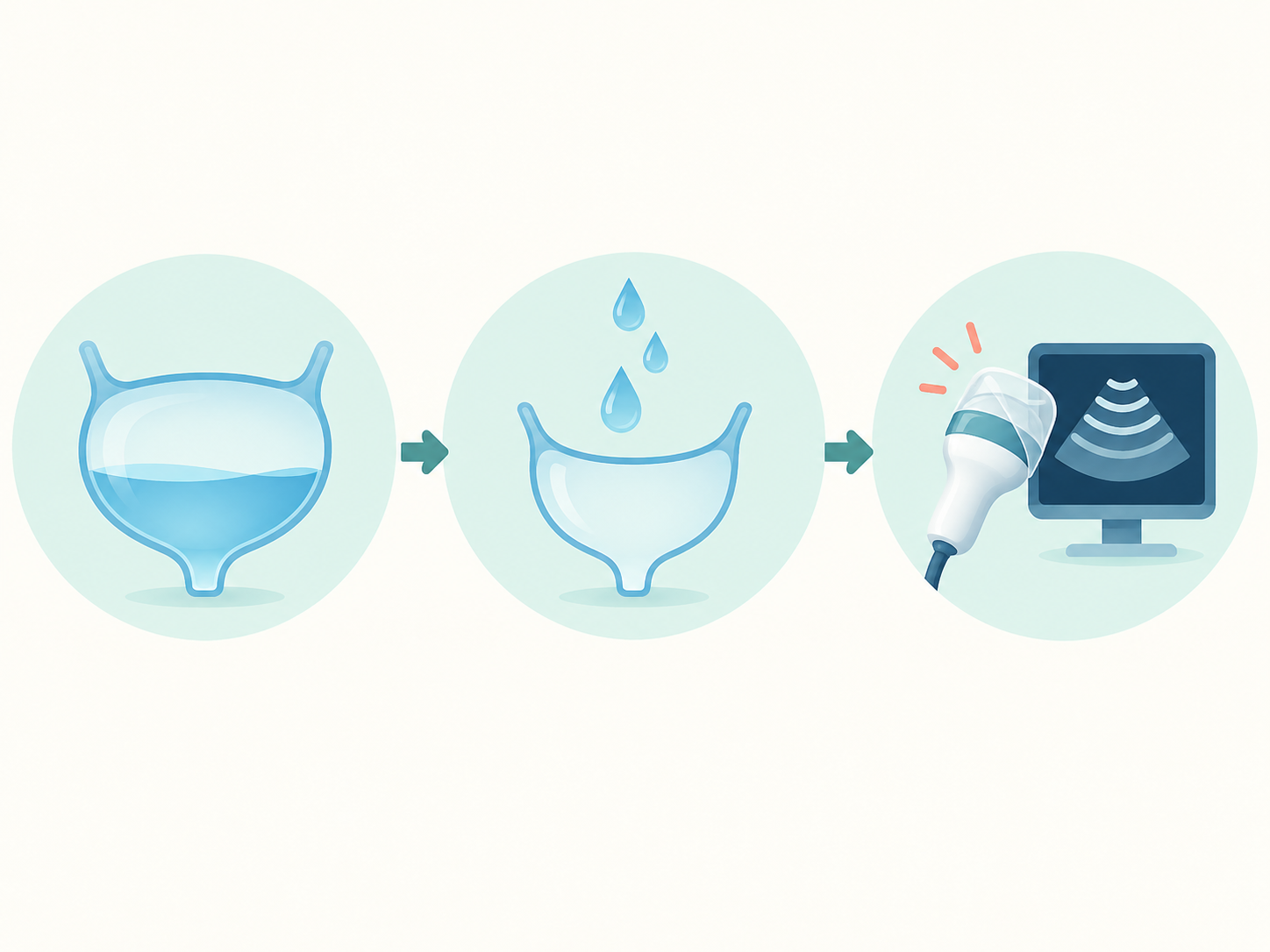
If both approaches are planned, the scan may happen in two steps: first an abdominal scan with a full bladder, then an internal scan after you have emptied your bladder. The exact sequence depends on the reason for the examination and the radiologist’s assessment.
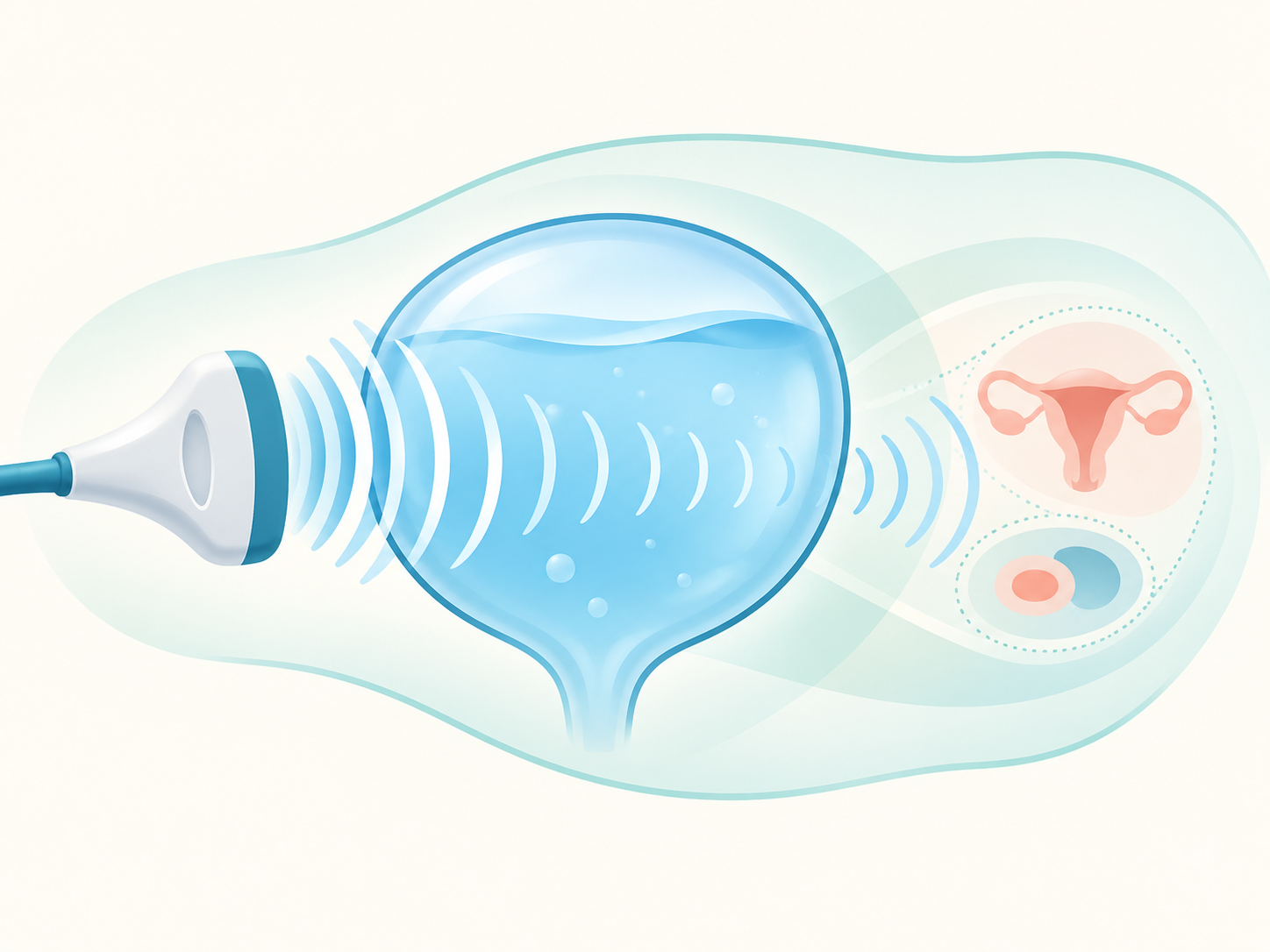
Why water may be requested
The abdominal view may come first
A full bladder may help the radiologist obtain a broader view through the abdomen. If an internal scan is also needed, the staff may then ask you to empty your bladder before that part.
2. Why may you be asked to empty your bladder?
For the internal part of a TVS, the ultrasound probe is placed gently inside the vagina, close to the pelvic organs. The bladder is commonly emptied before this part so the radiologist can obtain a closer view of the uterus and ovaries. Emptying your bladder may also make the examination more comfortable.
This is why “an internal scan does not need a full bladder” and “please come after drinking water” can both be correct instructions. They may refer to different parts of the same appointment.
Before the TVS portion
The radiologist may ask you to use the washroom
If the abdominal scan is completed and an internal scan is planned, the staff may ask you to empty your bladder. Check with them before doing so, especially if you were asked to drink water.
3. What should you do when you reach the diagnostic centre?
Do not rely only on general advice you have read online. The preparation can vary depending on whether your appointment includes an abdominal scan, an internal scan, or both. To avoid confusion:
- Follow the preparation instructions given by your diagnostic centre.
- Ask the staff whether an abdominal scan will be done before the internal scan.
- Check with the staff before emptying your bladder if you were asked to drink water.
- If you are uncomfortable because your bladder is very full, tell the staff and ask what to do.
- Bring your doctor’s prescription and relevant previous scan reports.
If the instructions are unclear or seem different from what you expected, call the centre before your appointment and ask for clarification.
4. What happens during an internal scan?
During a transvaginal ultrasound, a covered and lubricated probe is gently inserted into the vagina to obtain images of the uterus, ovaries, and nearby pelvic structures. The radiologist or staff can explain the steps before the examination begins.
Tell the radiologist if you feel uncomfortable, have pain, or need them to pause. You can ask questions about the examination and whether both abdominal and internal imaging are planned.
 Photo by National Cancer Institute on Unsplash
It is okay to ask
Tell the team if you are unsure or uncomfortable
The staff can clarify the preparation steps for your appointment. Let them know if you need an explanation or a pause at any point during the examination.
Watch Dr. Srinivas Prasad explain the instructions
In this reel, Dr. Srinivas Prasad explains why you may be asked to drink water before an internal scan and why the staff may ask you to empty your bladder later:
Frequently asked questions
Do I need a full bladder before an internal scan?
Not always for the internal scan itself. A full bladder may be requested if an abdominal scan is planned first. Follow the instructions provided for your appointment.
Should I empty my bladder before a TVS?
A TVS is commonly performed after emptying the bladder. If an abdominal scan comes first, the staff may ask you to empty it before the internal part.
Why did the centre ask me to drink water if I am having an internal scan?
The appointment may include an abdominal scan before the TVS. A full bladder may help with the abdominal view, after which you may be asked to use the washroom.
What if I am not sure whether to empty my bladder?
Ask the staff before emptying it, particularly if you were told to drink water. They can confirm the steps planned for your scan.
What if I accidentally empty my bladder before the appointment?
Tell the staff when you arrive. They can advise you based on the scan planned. Do not feel embarrassed or try to guess what to do next.
For related information, read our guide to TVS scans in pregnancy and our advice on common early pregnancy scan mistakes.
Need help with scan preparation?
For appointment instructions or scan-related questions, contact Nisarga Diagnostics, Sanjaynagar, Bengaluru. Please follow the preparation guidance given by your doctor and the diagnostic team.
Educational information only. Preparation can vary by examination and individual circumstances. Follow the instructions provided for your specific scan.

Founder of Nisarga Diagnostics, is a renowned fetal ultrasound specialist with over 20 years of expertise. An alumnus of Government Medical Colleges in Mysore and Bangalore, he also holds a D.N.B. from the National Board of Examinations, Delhi, and certification from the Fetal Medicine Foundation, London. A former Professor and HOD, he has trained countless PG students and junior radiologists, shaping the future of fetal imaging in India.