
Interval Growth Scan: Why Is It Performed During Pregnancy?

Pregnancy is a journey filled with many important milestones, and regular ultrasound examinations play a major role in monitoring the health of both the mother and the baby.

One such examination is the interval growth scan. As the name suggests, this scan is performed at specific intervals to monitor the baby’s growth and overall well-being throughout pregnancy.

At Nisarga Diagnostics, interval growth scans are performed using advanced ultrasound technology to provide accurate information about fetal development and help doctors identify any concerns at an early stage.

Watch our video on : Interval Growth Scan

What Is an Interval Growth Scan?

An interval growth scan is a specialised ultrasound examination used to evaluate the baby’s growth over time.

Unlike a single ultrasound examination, this scan allows doctors to compare measurements obtained at different stages of pregnancy. This comparison helps determine whether the baby is growing appropriately according to the gestational age.

The scan is often recommended for both routine pregnancy monitoring and high-risk pregnancies.

Why Is an Interval Growth Scan Important?

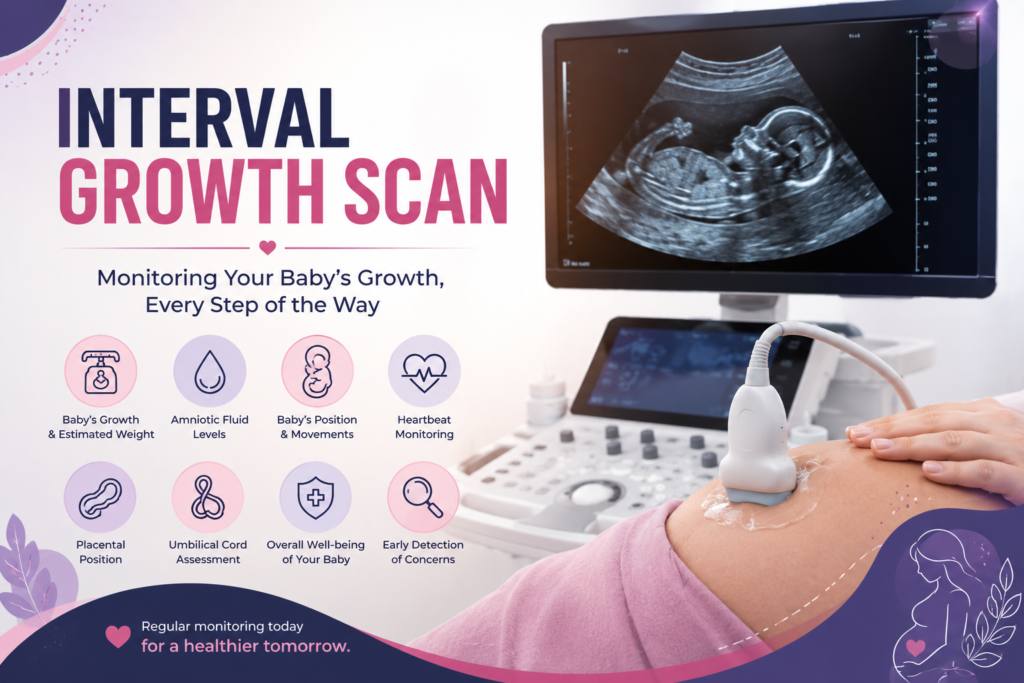
An interval growth scan helps doctors assess several important aspects of pregnancy, including:

  • The baby’s overall growth pattern
  • Estimated fetal weight
  • Placental health
  • Amniotic fluid levels
  • Fetal movements
  • Blood circulation
  • The baby’s position inside the uterus

Monitoring these factors helps ensure that the baby is developing normally.

What Does an Interval Growth Scan Evaluate?

1. Baby’s Growth Measurements

Doctors carefully measure several parts of the baby’s body, including:

  • Biparietal diameter (BPD)
  • Head circumference (HC)
  • Abdominal circumference (AC)
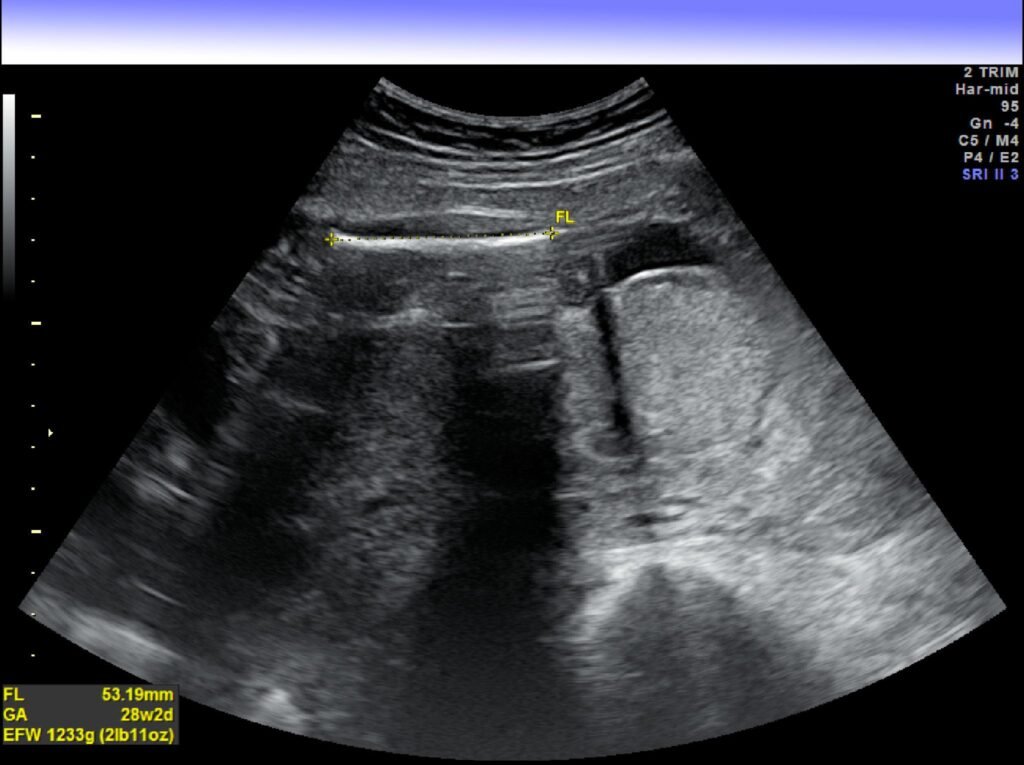
  • Femur length (FL)

These measurements help estimate the baby’s growth and weight.

2. Amniotic Fluid Levels

The amount of amniotic fluid surrounding the baby is carefully measured during the examination.

Abnormal fluid levels may indicate the need for additional monitoring.

3. Amniotic Fluid Levels

The placenta provides oxygen and nutrients to the developing baby.

Doctors assess:

  • Placental location
  • Placental maturity
  • Blood supply to the baby
4. Baby’s Heartbeat and Movements

The baby’s heart rate and movements provide valuable information about overall health and development.

Doctors may observe:

  • Body movements
  • Breathing movements
  • Muscle tone
  • Heart activity
5. Umbilical Cord Assessment

The umbilical cord is responsible for carrying oxygen and nutrients to the baby.

Doctors evaluate the cord to identify any abnormalities that may require additional attention.

6. Baby’s Position

As the pregnancy progresses, the baby’s position becomes increasingly important.

The baby may be in one of the following positions:

  • Cephalic position (head down)
  • Breech position
  • Transverse position


Who May Need an Interval Growth Scan?

An interval growth scan may be recommended for:

  • Women carrying twins or multiple babies
  • Mothers with high blood pressure
  • Women with gestational diabetes
  • Pregnancies with reduced fetal movements
  • Pregnancies with previous complications
  • Cases where abnormalities are suspected

How Should You Prepare for the Scan?

Preparation is usually simple.

Please carry:

  • A doctor’s prescription
  • Previous ultrasound reports
  • Blood test reports
  • Identity and address proof

In most cases:

  • Fasting is not required.
  • A full bladder is not necessary.

Always follow your doctor’s instructions.

How Long Does an Interval Growth Scan Take?

The procedure is generally completed during a single appointment.

However, the duration may vary depending on:

  • The baby’s position
  • Gestational age
  • The need for additional evaluation

Can an Interval Growth Scan Detect Abnormalities?

The primary purpose of an interval growth scan is to monitor fetal growth and well-being.

However, certain structural abnormalities may also be identified during the examination. Early diagnosis allows doctors to provide appropriate guidance and treatment whenever necessary.

Why Choose Nisarga Diagnostics?

At Nisarga Diagnostics, we combine modern imaging technology with experienced radiologists to provide accurate and reliable results.

Our goal is to ensure that every mother receives personalised care throughout her pregnancy journey.

Frequently Asked Questions

Is fasting necessary before the scan?

Yes. Ultrasound scans are considered safe when performed by qualified healthcare professionals.

Is fasting necessary before the scan?

No. Fasting is usually not required.

Can I undergo multiple interval growth scans?

Yes. Your doctor may recommend additional scans whenever necessary.

Is the procedure painful?

No. The examination is painless and non-invasive.

Final Thoughts

If your doctor has advised a fetal echo scan, it is important not to postpone the examination. Early assessment of the fetal heart allows doctors to identify potential concerns and plan appropriate care whenever necessary.

At Nisarga Diagnostics, our experienced specialists use advanced imaging technology to provide comprehensive fetal assessments while ensuring the comfort and safety of both mother and baby.

Early evaluation brings better preparation, better care, and greater peace of mind. 💙

Leave a Comment

Your email address will not be published. Required fields are marked *