

Can an Unborn Baby Develop Heart Block? Everything Parents Should Know
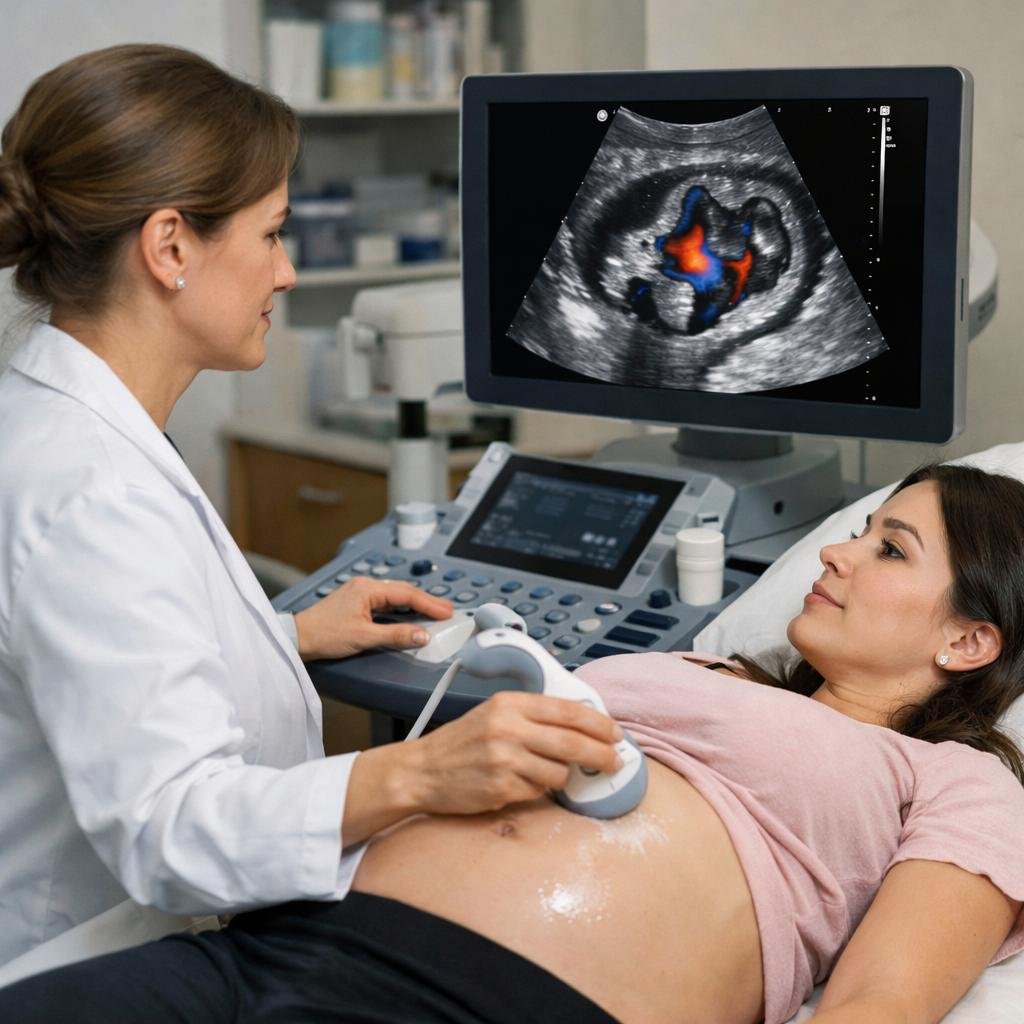
Pregnancy is an exciting journey filled with several important health check-ups that help ensure the well-being of both mother and baby. While most parents are familiar with routine pregnancy scans, few know that certain heart rhythm problems can develop in a baby even before birth.
One such condition is fetal heart block, a rare but potentially serious condition that affects the baby’s heartbeat. Fortunately, with modern imaging techniques such as Fetal Echocardiography (Fetal Echo), doctors can identify this condition early and plan the best possible care.
At Nisarga Diagnostics, we offer advanced fetal imaging to help detect congenital heart conditions during pregnancy, providing reassurance and timely medical guidance for expecting parents.
Watch our video on : Can an Unborn Baby Develop Heart Block?
What is Fetal Heart Block?
The heart beats because of electrical signals that travel through a specialized conduction system. These signals begin in the upper chambers (atria) and travel to the lower chambers (ventricles), allowing the heart to pump blood efficiently.
In fetal heart block, these electrical signals are delayed or completely blocked.
As a result:
- The baby’s heart beats slower than normal.
- Communication between the atria and ventricles is affected.
- In severe cases, the upper and lower chambers beat independently.
This condition is also known as Congenital Atrioventricular (AV) Block.
How Does a Normal Fetal Heartbeat Work?
-
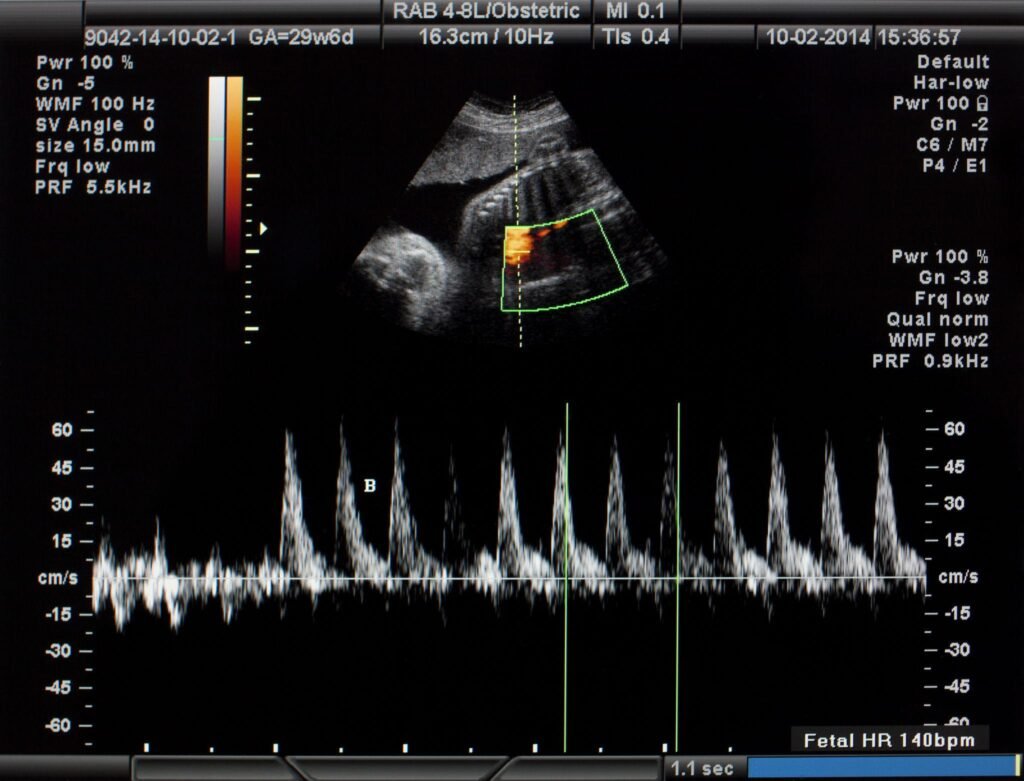
In a healthy fetal heart:
- Electrical impulses start in the atria.
- The impulses travel through the AV node.
- The ventricles receive the signal and contract.
- Blood circulates efficiently throughout the baby’s body.
When this electrical pathway is interrupted, the heart cannot beat in its normal coordinated rhythm.
What Causes Fetal Heart Block?
Several factors can contribute to fetal heart block.
1. Maternal Autoimmune Disorders
The most common cause is when the mother has autoimmune antibodies, including:
- Systemic Lupus Erythematosus (SLE)
- Sjögren’s Syndrome
- Positive Anti-Ro (SSA) antibodies
- Positive Anti-La (SSB) antibodies
These antibodies can cross the placenta and affect the baby’s developing heart conduction system.
2. Congenital Heart Defects
Some babies with structural heart abnormalities may also develop heart block.
3. Rare Genetic Conditions
Although uncommon, inherited disorders affecting the heart’s electrical system may also be responsible.
Is Fetal Heart Block Common?
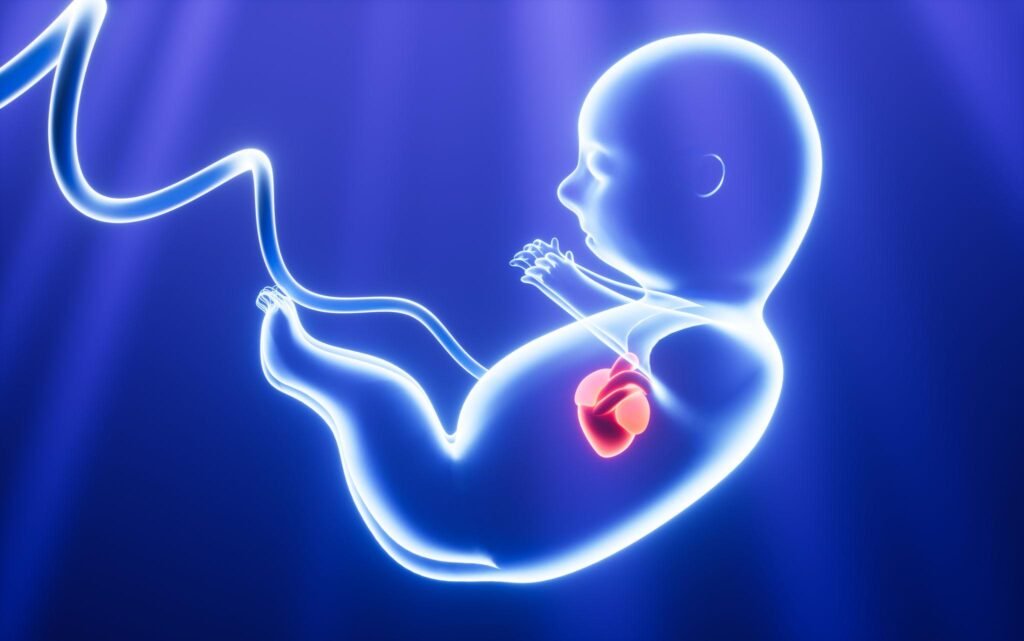
No.
Fetal heart block is considered a rare condition, but it is clinically important because untreated severe cases can lead to complications.
The good news is that early diagnosis allows doctors to monitor the pregnancy closely and determine the safest treatment plan.
What are the Symptoms?
Unlike adults, unborn babies cannot show symptoms directly.
Instead, doctors may suspect fetal heart block if:
- The fetal heart rate is unusually slow.
- An irregular heartbeat is detected during a routine pregnancy scan.
- The mother has known autoimmune disease.
- Previous pregnancies were affected by congenital heart block.
How is Fetal Heart Block Diagnosed?
The most reliable test is Fetal Echocardiography (Fetal Echo).
A fetal echo is a specialized ultrasound that examines:
- Baby’s heart structure
- Heart chambers
- Heart valves
- Blood flow
- Heart rhythm
- Electrical conduction pattern
Unlike a routine pregnancy ultrasound, a fetal echo focuses entirely on the baby’s heart.
When is a Fetal Echo Recommended?
Your obstetrician may recommend a fetal echo if:
- A routine anomaly scan suggests a heart abnormality.
- The fetal heart rate is slower than expected.
- The mother has lupus or another autoimmune disorder.
- There is a family history of congenital heart disease.
- Previous pregnancy had fetal heart block.
- The pregnancy is considered high-risk.
Can Fetal Heart Block Be Treated?
Treatment depends on:
- The severity of the heart block.
- The gestational age.
- Whether the baby has heart failure.
- Presence of associated heart defects.
Management may include:
- Regular fetal echo monitoring.
- Maternal medications in selected cases.
- Close coordination between obstetricians, fetal medicine specialists, and pediatric cardiologists.
- Delivery planning at a center equipped for neonatal cardiac care if required.
Not every baby with fetal heart block requires immediate intervention before birth.
Why Early Detection Matters?
Detecting fetal heart block early allows doctors to:
- Monitor the baby’s condition regularly.
- Watch for worsening heart rhythm.
- Identify complications early.
- Plan delivery safely.
- Arrange specialized newborn cardiac care if needed.
Early diagnosis improves preparedness for both the medical team and the parents.
Is Every Slow Fetal Heart Rate Dangerous?
No.
A slower heart rate does not always indicate heart block. Temporary changes in fetal heart rate can occur for several reasons.
This is why further evaluation with a Fetal Echo is important whenever there is concern about the baby’s heartbeat.
Only a detailed assessment can determine whether the rhythm is normal or requires medical attention.
Frequently Asked Questions (FAQs)
Can an unborn baby really develop heart block?
Yes. Although rare, fetal heart block can develop during pregnancy due to problems with the baby’s heart’s electrical conduction system.
Is fetal heart block hereditary?
Most cases are related to maternal autoimmune antibodies rather than inherited genetic conditions, although rare genetic causes do exist.
Is fetal heart block curable?
Management depends on the cause and severity. Early diagnosis allows doctors to monitor the baby and plan appropriate treatment and delivery.
Is fetal echo safe during pregnancy?
Yes. Fetal echocardiography is a safe, non-invasive ultrasound examination that uses sound waves and does not expose the baby to radiation.
Which mothers are at higher risk?
Women with autoimmune conditions such as lupus, Sjögren’s syndrome, or positive Anti-Ro/SSA and Anti-La/SSB antibodies may have a higher risk and may be advised to undergo fetal echocardiography.
Conclusion
Fetal heart block is an uncommon but important condition that can affect a baby’s heartbeat before birth. With advanced imaging such as Fetal Echocardiography, doctors can identify heart rhythm abnormalities early, closely monitor the pregnancy, and prepare the most appropriate care for both mother and baby.
If your doctor has recommended a fetal echo or if you have risk factors such as an autoimmune condition, timely evaluation can provide valuable information and peace of mind.

Founder of Nisarga Diagnostics, is a renowned fetal ultrasound specialist with over 20 years of expertise. An alumnus of Government Medical Colleges in Mysore and Bangalore, he also holds a D.N.B. from the National Board of Examinations, Delhi, and certification from the Fetal Medicine Foundation, London. A former Professor and HOD, he has trained countless PG students and junior radiologists, shaping the future of fetal imaging in India.